Editor’s note
Before interviewing Janet, I already thought of her as an extraordinarily capable woman. I even wondered, quietly, whether someone that capable might be difficult to approach.
After spending time with her, I realized I had only been half right. She is, in fact, extraordinarily capable. But she is also deeply easy to be with. You can joke with her. You can share half-formed ideas. You can admit what you do not know. She has seen mountains and rivers, deserts and cities, but she never uses experience as a platform to look down on anyone. She moves quickly and gets things done, yet she never makes the rest of us feel clumsy for still learning.
She feels more like an older sister who sits down beside you and helps sort things out. She talks about the world, and she talks about bookkeeping. She talks about travel, and she talks about volunteer work. She talks about Zhou Shen, and she talks about senior homes, donation boxes, water filter pitchers, and what our community might do next. If we wrote her story only as a story about being a fan, we would make it too small. What is most moving about Janet is the way she turns affection into action.
Departure
01 The woman who set out first: she cared for her daughter without losing herself
Janet had wanted to see the world for a very long time. It was not a dream that appeared only after her child grew up, after life became stable, or after time finally opened up. The dream had always been there. Life simply kept asking her to take care of what was right in front of her first.
In 1996, she left a well-paid job in Hong Kong and returned home to care for her daughter. When her husband asked which one of them should stay home with the child, Janet laughed and called it “fake democracy.” Given the difference between their incomes at the time, the answer had already been decided. She agreed to stay home, but she set one condition: she wanted to begin her own round-the-world journey.
When her daughter was two years and three months old, Janet bought the ticket, packed what she needed, placed her little girl in a stroller, and left. Friends told her she would not last ten days. She did not argue. She simply began. There were no smartphones, no Google Maps, no GPS. Phone calls were painfully expensive. Accommodation came from guidebooks. The next stop was often decided while already on the road.
That trip lasted more than three months and took them through fourteen countries. Her daughter was calm: she slept on planes, slept on buses, and woke up at three or four in the morning as soon as Janet started preparing a bottle. Janet tells these stories lightly, as if it were just something she did when she was young and loved to travel. But listening to her, you understand that it was never merely “love to travel.” It was discipline. It was courage. It was also a balance she had learned early as a mother: care for the child well, but do not pause your own life completely.
“The main thing is that you have a dream, and you want to make it real.”Janet, remembering that three-month mother-daughter journey
Vancouver years
02 Twelve years in Vancouver: paper maps, night school, and one hundred kilometres a day
Later, Janet brought her six-year-old daughter to Vancouver. After only a few days of school, her daughter said, “Mom, let’s not go back.” The academic pressure in Hong Kong had been heavy, and here she could finally breathe. So the mother and daughter stayed, and a new twelve-year chapter began.
Her husband continued to run his business in Hong Kong, so the family lived a life familiar to many immigrant families: one parent in one place, one parent in another, connected by flights and phone calls. Janet flew back a few times a year. Her husband came to Canada a few times as well. But the weight of daily life mostly rested on her.
She once worked in moving and container estimates. This was before GPS navigation. She would spread a paper map near the steering wheel, drive from address to address, and estimate whether a household needed a twenty-foot, thirty-foot, or forty-foot container. Later, she worked in bookkeeping and accounting, arranging her hours around her daughter’s school day. She also took night classes to learn Canadian tax rules and business practices. Her daughter was only six and would sit quietly at the back of the classroom from six to nine in the evening, reading while her mother studied.
When her daughter later attended high school near UBC, Janet was living in Richmond, while her own company was near White Rock. By the time she completed the daily loop, she had driven almost exactly one hundred kilometres. Janet talks about it as if it were just an old routine. Those of us listening can only wonder: how did she do all of that?
A well-paid job, a young mother, and the first journey around the world with her daughter.
Twelve years of raising her daughter largely on her own: work, night school, school runs, and everything a new immigrant has to learn.
She accompanied her daughter to McGill University and began volunteering with Tzu Chi and senior-home activities.
Her daughter went on to complete two master’s degrees. Janet gained more freedom, travelling with banners and memories of the songs she loved.
Nepal relief
03 Two weeks in Nepal: she cannot remember everything she did, because she was always doing something
In Montreal, Janet volunteered with Tzu Chi. One principle she deeply respected was that volunteers paid their own way. Flights, food, accommodation, local transportation — volunteers covered these costs themselves rather than drawing from donations. When they visited senior homes to chat with residents, dance with them, or lead light exercises, even the tea afterward was paid for personally. Janet emphasized this more than once: every donated dollar should go as directly as possible to the people who truly need it.
After the earthquake in Nepal, she signed up to volunteer there. This was not a trip where the organization paid for her flight, room, and meals. She went at her own expense. Before she arrived, she did not fully know how difficult the conditions would be. Once she got there, she saw that many buildings had collapsed. Normal accommodation was not really an option. What they had were temporary tents.
The relief supplies were urgent. There was no time to send everything by sea. They flew donated items from Canada, including what Janet described as “that really good Canadian water pitcher” — something that could take dirty water from a riverbank and filter it into drinking water. As we listened, we understood she was probably referring to a Brita-type water filter pitcher. The point was simple and immediate: get clean water into people’s hands.
The work on the ground was not the kind of volunteer experience where someone gives you one clearly defined task, takes a photo, and then everything is neatly finished. People and needs arrived all at once. Someone would call out: we need a huge pot of food ready within two hours. Everyone would gather immediately. Whoever could cook cooked. Whoever could carry carried. Whoever could distribute supplies went out to distribute. There was no time for elaborate roles, and no time to sit with your own feelings.
And at night? Janet says she slept “a few hours,” but even those few hours did not necessarily come with a real place to lie down. Most of the sleeping bags had been given to people who needed them more. The volunteers pushed several chairs together, leaned back, and dropped into a brief, exhausted sleep. Then morning came — or almost morning — and the work began again.
When Janet looks back on those two weeks, there is a strange blankness in her memory. Not because she did little, but because she did too much, too quickly, too continuously. One task followed another. A person in that environment is carried forward by the next urgent thing. Years later, when asked to list what she did, she cannot produce a tidy inventory. She can only say: I know I did so much, but I no longer know exactly what I did.
“People were just working intensely, one thing after another. When I think back now, it is almost blank. I know I did so much, but I don’t really know what I did.”Janet, on volunteering in Nepal
This part matters. It reveals something solid at the core of Janet. She is not only someone who travels. She is not only someone who enjoys lively gatherings. She can place herself in difficult conditions, with no comfort, no clear boundaries, and no applause. If food needs to be cooked, she cooks. If supplies need to be distributed, she distributes them. If a sleeping bag is needed by someone else, she gives it away. If she cannot remember it all afterward, that is fine too. A disaster-relief site was never meant to become a beautiful résumé line for anyone.
Later, when we talked about our own community work in Vancouver, Janet brought that same principle home with her: volunteers should cover their own costs whenever possible, and donated money should be used clearly and carefully for people who need it. This is not a polished slogan. It is something she has lived — among tents, water filters, cooking pots, and a few chairs pushed together for sleep.
First listening
04 A library at McGill: in one voice, she heard an echo of the past
Janet first discovered Zhou Shen in 2014. She was in the library at McGill University, tired from reading, listening to something on her phone through earphones. Then a voice suddenly caught her.
She had always loved Teresa Teng. After Teresa Teng passed away in 1995, Janet felt that a place in her heart had been left empty. She wondered whether there would ever again be a voice that could warm her in that particular way. That day, when she heard Zhou Shen sing, something in that empty place answered.
She called a Chinese radio station and asked, “Who is this?” They told her he was a singer from The Voice of China and gave her an approximate time for the rebroadcast. She wrote down the time and waited at home to listen. Later, she saw him again on Chinese-language television in Canada. Back then, there were not the platforms we have now, and she was not yet familiar with Weibo, WeChat, or QQ. So she searched slowly on YouTube, piece by piece, remembering the name as she went.
Then came Zhou Shen’s fan community, charity performances in Singapore, and concert after concert. Janet does not describe those years in exaggerated language. She simply says that life felt as if it had started to bloom.
Seventy thousand kilometres
05 On an African border: she placed “I love Zhou Shen” on a travelling car
The most cinematic part of Janet’s story happened in Africa.
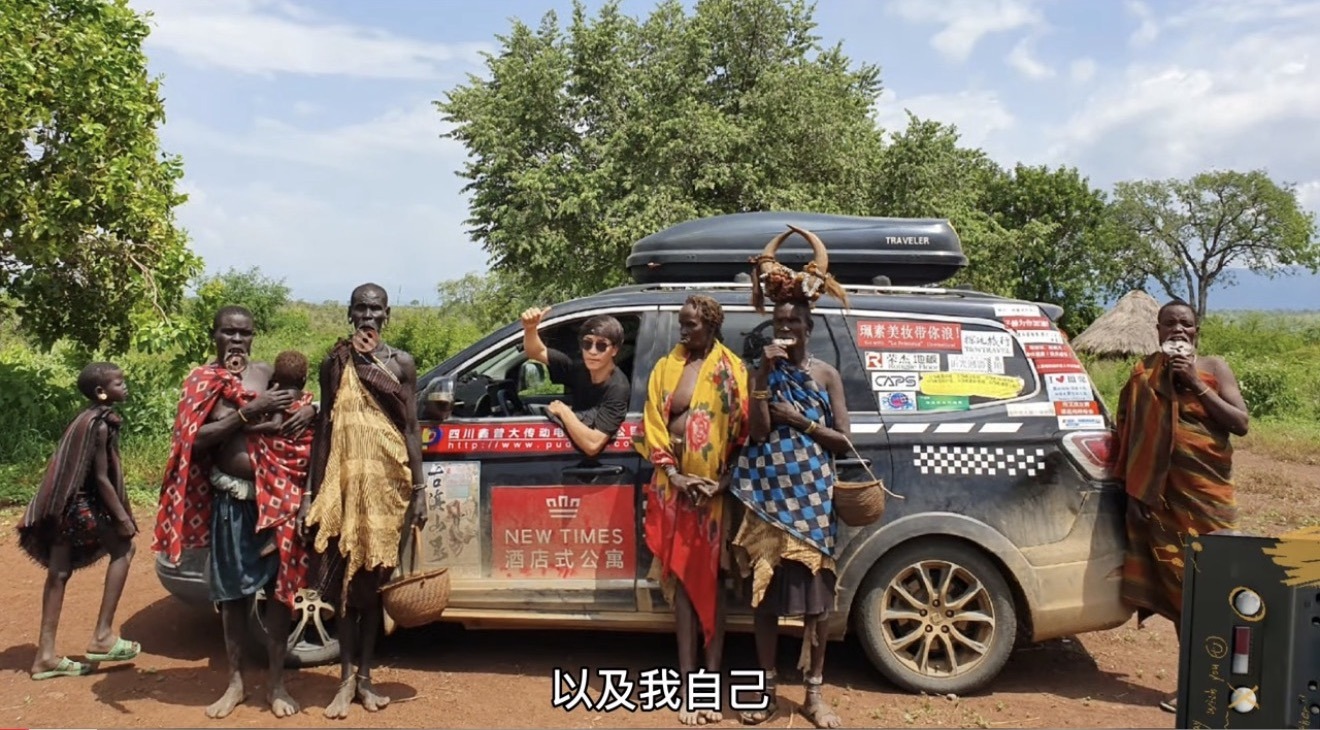
At a border crossing somewhere between Mozambique and Zambia, she saw a car with a Chinese licence plate, covered in stickers and advertisements. A fellow traveller told her that the driver was a young Chinese man on a long overland journey who needed some financial support. Janet added him on WeChat and gave what help she could.
Then she noticed all the ads on the car and asked: could he also put a Zhou Shen sticker on it for her?
The sticker said, “I love Zhou Shen.” Beneath it were the words: “Through wind and rain, in the same boat; with deep affection, never wavering.”

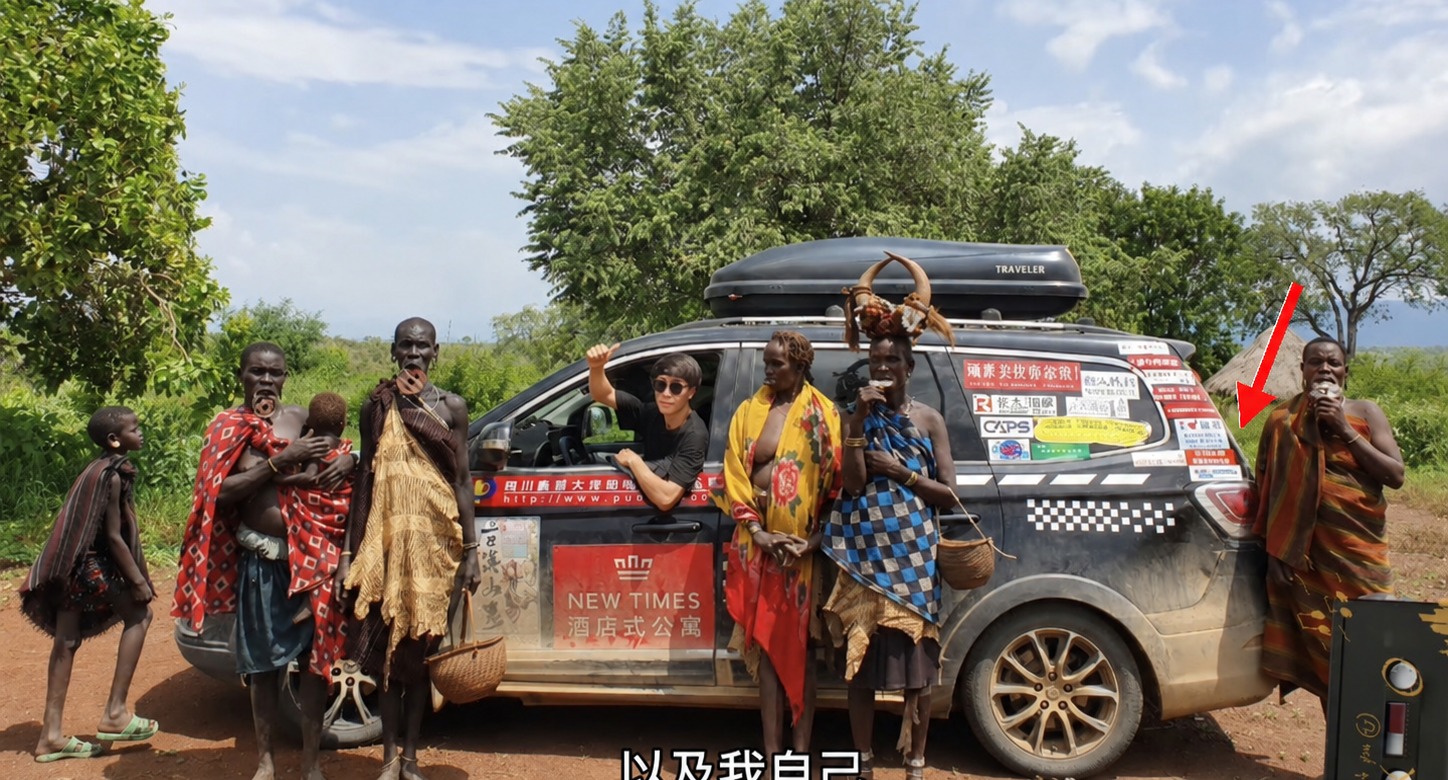

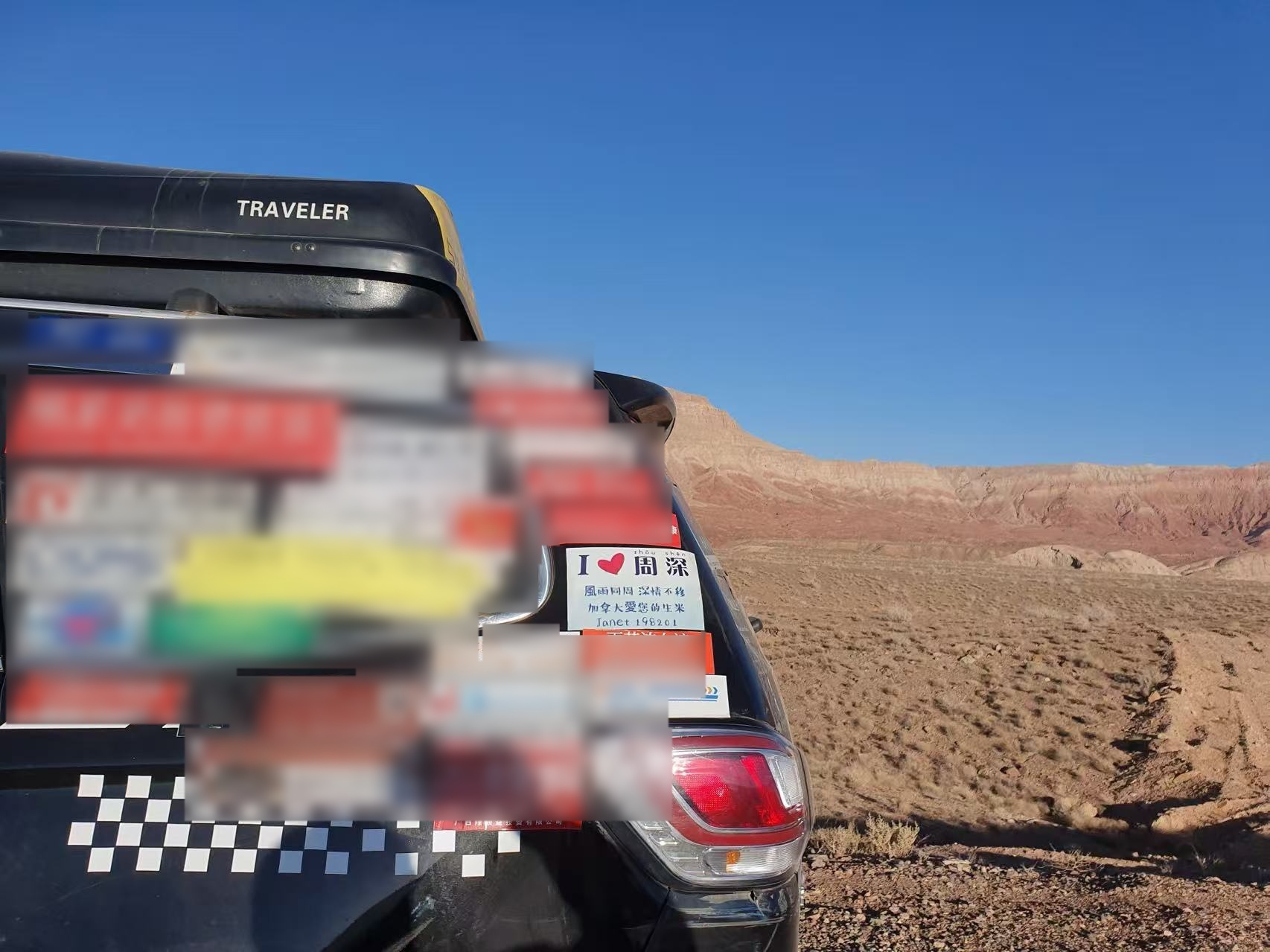

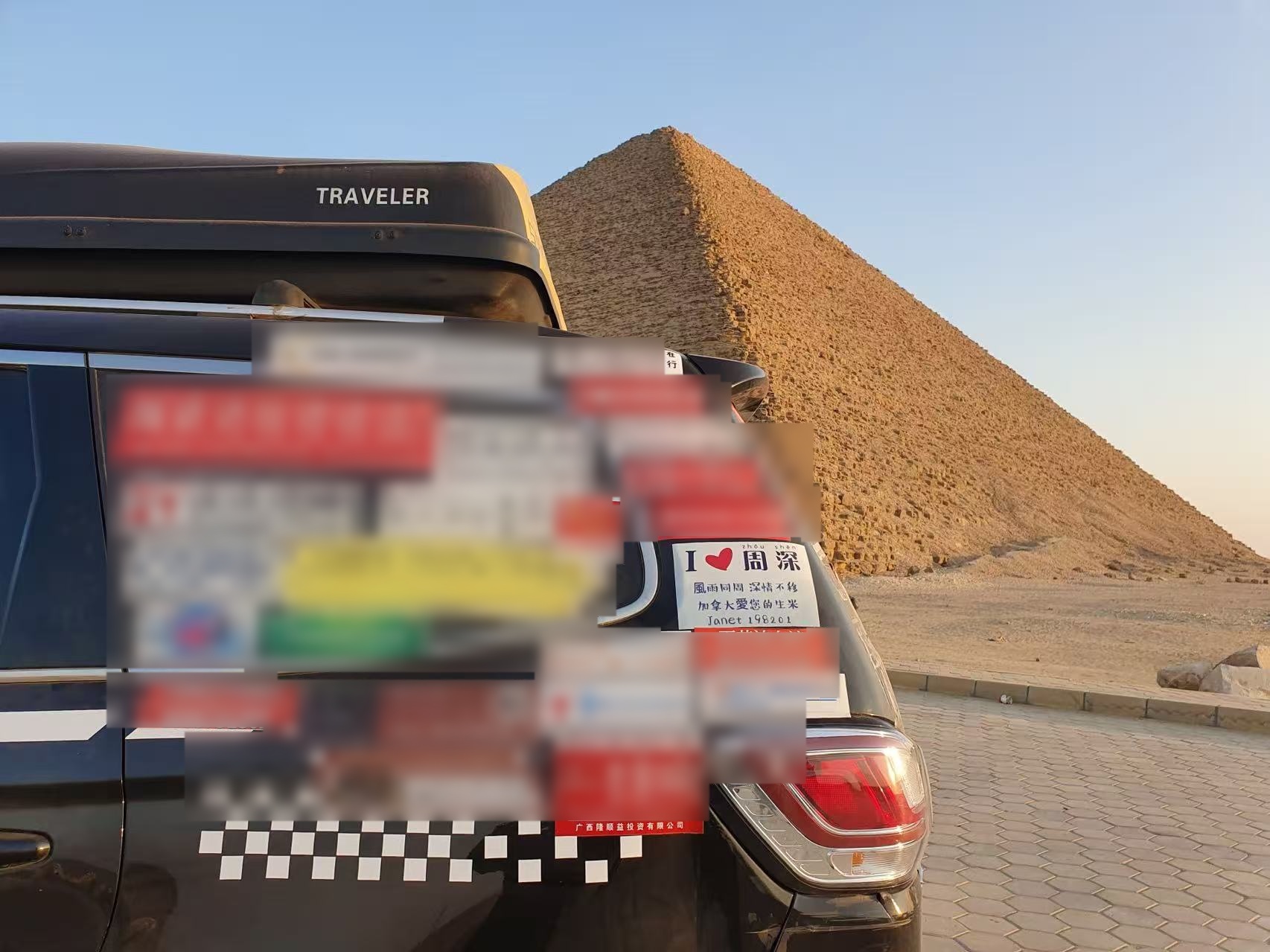
After that, the car carried the little sticker from Africa through the Middle East, Russia, and the Caucasus, eventually returning to China. It crossed Xinjiang and made its way toward Wuhan, Guangzhou, and beyond. Janet estimates that it travelled more than 70,000 kilometres.
A small sticker is not, of course, a grand historical event. But what makes it touching is precisely its smallness. It was not an official campaign or a polished piece of promotion. It was simply one person, travelling far from home, noticing a chance and entrusting her affection to a car: please carry this gratitude a little farther for me.
That is very Janet. Her romantic side is not vague or abstract. She adds the WeChat contact. She pays. She shortens the message to fit the space. She accepts the real conditions in front of her — and then she makes something happen.
Music & care
06 Heartbeats woven into music: she knows music is not just a feeling
Janet’s daughter later moved into work connected with music and psychological support. She had interned in a hospital-related setting at New York University and once had the possibility of continuing toward doctoral study. COVID disrupted that path, but she later completed another master’s degree and opened her own studio, focusing on work related to music healing and emotional support.
One quiet story from the interview stayed with me. Janet’s daughter once supported a mother who had experienced profound grief. She recorded the sound of the baby’s heartbeat, wove it into music she created, and gave it to the mother. Janet said that experience made her feel even more clearly that music can truly accompany people.
So for Janet, Zhou Shen’s voice is not simply “beautiful.” During many journeys, she was walking alone, riding alone, moving through unfamiliar places alone. His songs were there in her ears like a thread she could hold. In a village, on a road, or in a night far from home, the voice would make her treasure life more, and treasure the people passing through it.
Editor’s note: the research basis for music therapy
Music therapy is a field with professional training, clinical practice, and a growing research base.
- American Music Therapy Association: music therapy is the clinical and evidence-informed use of music interventions by trained professionals within a therapeutic relationship to address individualized goals.
- Cochrane Review: Music therapy for depression: music therapy added to usual treatment may help improve depressive symptoms, anxiety, and functioning compared with usual treatment alone.
- NIH NCCIH: Music and Health: the NCCIH summarizes current research on music-based interventions for pain, anxiety, depressive symptoms, neurological conditions, and other areas.
Back to community
07 Back in Vancouver: begin with what we can actually do
When we talked about Vancouver Shengmi Community Society, Janet quickly began sharing ideas from her volunteer experience. She said we could contact senior homes and ask whether they would welcome us to visit, chat with residents, and lead simple stretching or movement activities. We could play Zhou Shen’s songs and let music help create a warm atmosphere. We could begin once a month. We did not have to make everything big at the start.
This was not a vague appeal to “do charity.” Janet was describing a real path: how to make the phone call, how to introduce our role, how an activity might begin, and how past volunteer photos and experience could help an organization understand who we are. She was not standing off to the side praising us for having “good intentions.” She was helping us break a blurry idea into steps we could actually carry out.
She also reminded us that a fan-based community is not the same as an established charity. We are starting from a different place, and the things we can do need to grow step by step. But that does not stop us from beginning with small actions. Bottles can be collected. Coins can be saved. A first senior-home visit can be tried.
“We are doing this in the name of love. We love Zhou Shen, and we hope the warmth he gives can continue outward.”Janet, on what Vancouver Shengmi can do
I kept thinking about why Janet’s story belongs in our Member Stories series. It is not simply because she has travelled to many countries or seen dramatic scenes. It is because she knows how to bring a very large world back down into very small actions.
She can talk about a car at an African border, and she can talk about one gentle stretching exercise in a senior home. She can talk about 70,000 kilometres, and she can talk about one water filter pitcher. She can talk about Zhou Shen’s voice, and she can talk about how to make sure donated money reaches the people who need it.
If Zhou Shen ever sees this story one day, I hope he knows that some songs really do travel far. They enter one person’s journey. They enter her volunteer work. They enter a small community in Vancouver that is still learning how to grow. And slowly, they become things we are willing to do.
Editor’s vow
08 The direction I want to move toward
At this point in the story, I find it difficult to remain only a bystander. So much of what Janet has done is exactly what I hope to do: to see the world, and to help people; to carry love into faraway places, and to let kindness land close to home.
What I admire most is not the number of countries she has visited. It is the way she turns every road into action. At an African border, she could let a small sticker keep travelling. After an earthquake in Nepal, she could put herself into the busiest, messiest, most urgent part of the relief site. She can talk about travel, but she can also talk seriously about water filters, sleeping bags, senior homes, volunteer expenses, and how donations should be used.
In a very real sense, Janet is my goal, my role model, and the direction I want to move toward. The charity work she has taken part in is exactly the kind of work I hope Vancouver Shengmi Community Society can slowly grow into: not only slogans, not only excitement, but people truly willing to give time and energy, and to pass on the warmth that music once gave us.
Our community is still small, and what we can do is still limited. We are still learning how to organize activities, how to contact institutions, how to handle money and responsibility clearly, and how to make sure every act of goodwill truly reaches someone who needs it. But we are improving, little by little. And we will keep improving, little by little.
Closing note
Afterword: she brings the faraway back home
Janet does not belong only to “faraway places.” She has certainly travelled far, but what is rare is that she never turns distance into display. She brings the faraway back with her, turning it into judgment, action, respect for others, and a practical reminder: when there is something you want to do, begin with the part you can do.
A car sticker travelled more than 70,000 kilometres. A water filter pitcher was sent into a disaster zone. A song accompanied one person through many countries. In the end, all of them came back here — to Vancouver, to this small group of people still learning how to turn affection into action.