01 MeetingThe Afterglow of the Interview
After the interview ended that day, none of us seemed ready to leave.
What began as one person's story had quietly opened into something larger. There were five of us, from Hong Kong, Macau, Taiwan, and mainland China. We were from different places, different generations, and very different chapters of life. Someone joked that, if it had not been for Zhou Shen, she might never have set foot in mainland China in her lifetime. M Jie-jie laughed too and said there was also a generation gap between her and the rest of us.
Without thinking, I said:
No matter what kind of gap it is, Zhou Shen somehow filled it.
She came from Hong Kong to Canada, first Toronto and later Vancouver.
Work, housework, and raising her daughter, with responsibility always first.
"Our Song" became the start of truly following Zhou Shen.
Each morning brought something to watch, and quiet days gained expectation.
Family, a grandson, and friends who met because of the same voice.
The moment I said it, I paused.
Because it felt exactly like the aftertaste of that afternoon. The gaps were real: geography, language, age, upbringing, life experience. They had always been there. And yet, as we kept talking, they seemed to soften. It was as if we had each walked a very long way from very different places, only to meet one another inside the same voice.
M Jie-jie sat there with her gentle smile.
Her hair was neatly in place, her voice soft and unhurried, carrying the warmth of Cantonese. She told us that her health had not always been good, but if she had not mentioned it herself, I would hardly have connected her with the word "age." Her skin was clear, her eyes bright, and when she smiled, there was something almost childlike in it.
It was not the lightness of someone who had never known hardship.
It was the softness of someone who had lived through many things and somehow refused to let life turn her bitter.
It was not the lightness of someone untouched by hardship, but the softness of someone who had refused to let life turn her bitter.
02 LifeSeriousness Was Her Way of Living
She is now in her seventies. In February 1988, she came to Canada. At the time, she was still young, and her daughter was only three, just old enough to walk, still small enough to need to be carried. She first arrived in Toronto and later moved to Vancouver. There was no extended family nearby, no familiar circle of friends, and everything came at once: a new country, a job, a household, a child, and a marriage under pressure.
When she spoke about those years, her voice was calm.
She said she was simply busy. Work, housework, taking care of her daughter -- for more than twenty years, she had almost no life of her own. Entertainment was out of the question. Even the thought of asking herself what she wanted seemed like a luxury she did not have time for.
In Canada, she worked in the life insurance industry, mostly in back-office administration. She was not the person standing in front of clients selling policies. She was the one behind the scenes, processing applications, monitoring procedures, training staff, answering questions from agents and clients, learning new systems after every upgrade, and then teaching everyone else how to use them.
She said the job was stressful.
There were targets every month and every week. When agents brought in applications, the files could not just sit there. They had to be processed within a certain time and sent to the underwriters. Later, when she became a supervisor, she managed a department of more than ten people. She attended meetings, coordinated work, handled complaints, and stayed on top of system changes. She smiled as she told us that the younger staff learned computer systems quickly, but they did not have her experience; she had the experience, but she had to work much harder to keep up with the technology.
She did not say any of this with resentment.
She simply explained it as if it were obvious: when there is work to do, you do it properly.
Only later did we learn that there was so much more she had barely mentioned during the interview.
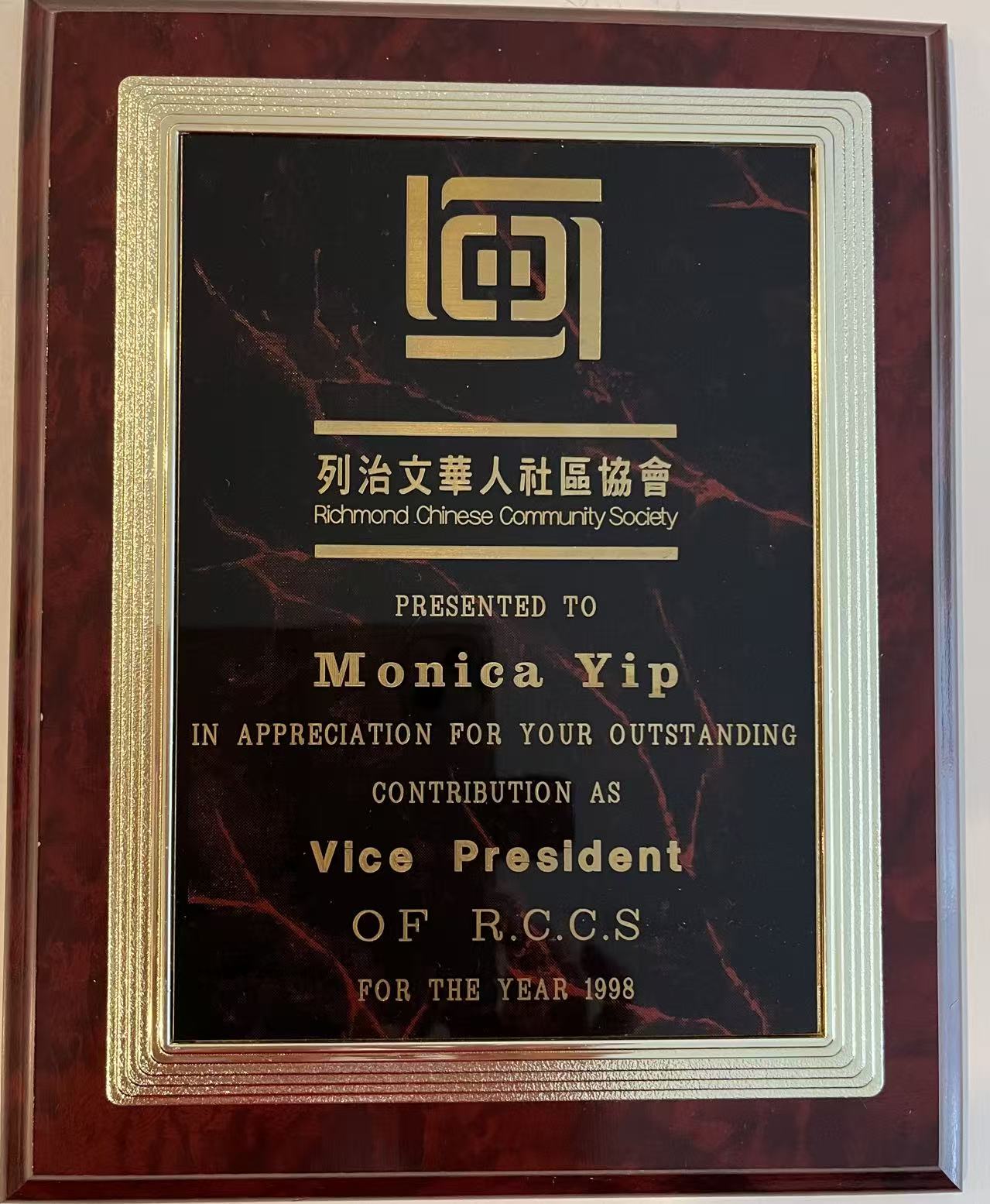
While working full-time and raising her child, she was also deeply involved with a non-profit Chinese school in Richmond. It was not a ceremonial title, not the kind of volunteer role where one simply attends a meeting now and then. She helped promote Chinese language education, find sponsors, organize holiday and cultural events, recruit students, look for teachers, and keep tuition low because the school was rooted in community service.
She said it lightly, as if it were just one more small thing she had done along the way.
But to the rest of us, it was not small at all. Here was an immigrant mother with a demanding job, a child to raise, and a household to carry, still giving her time to the community, to children, to language, and to cultural continuity. This was not a momentary burst of goodwill. It was a quiet, long-term sense of responsibility.
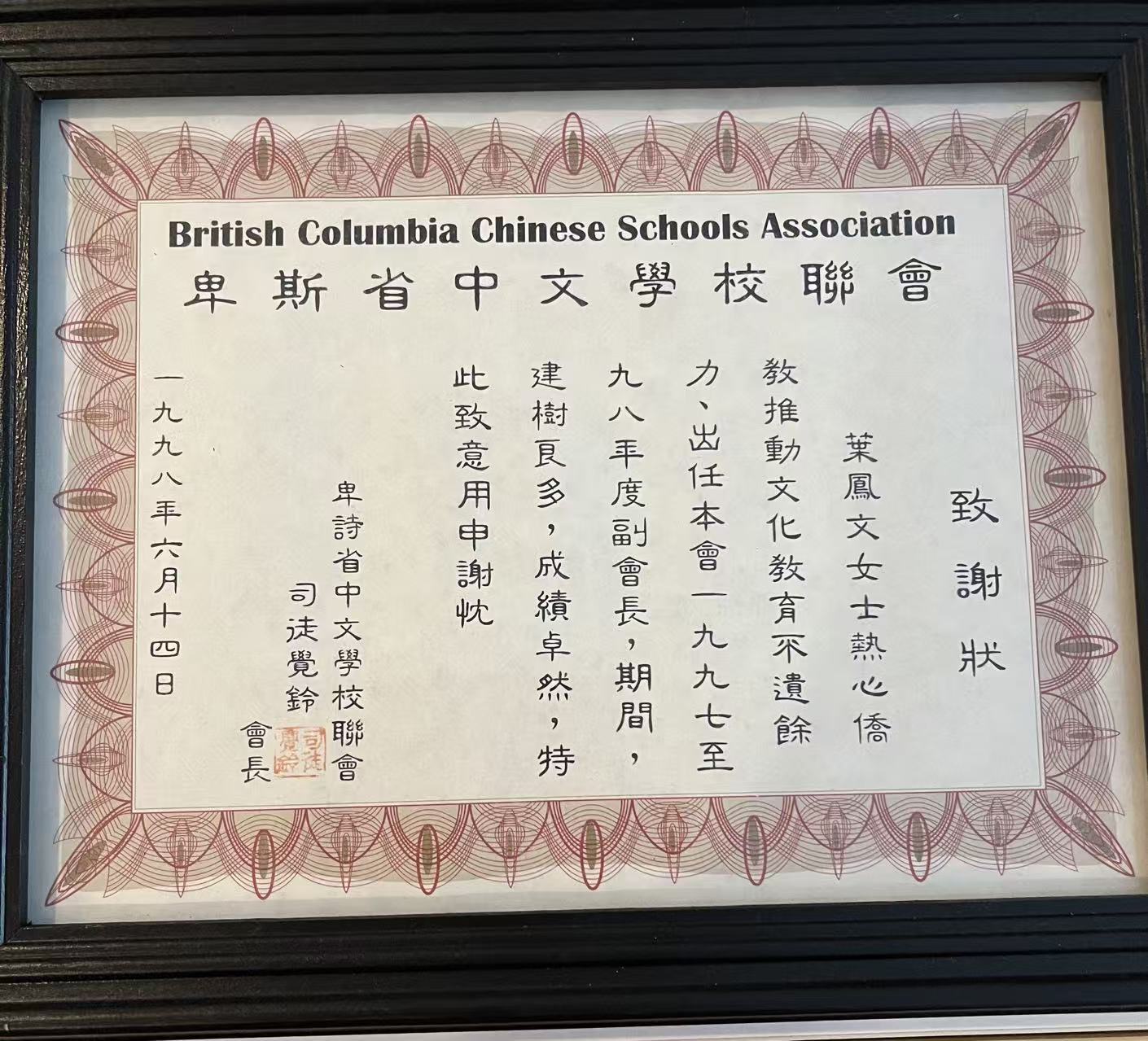
Later, the Vancouver campus also reached out to her for help. At another point, a politician asked her to assist with a campaign. She did that too, for a while. But after seeing politics up close, she became disappointed and eventually stepped away.
She did not present these experiences as accomplishments. In fact, if they had not come up later in conversation, we might never have known. That seems to be her way: do the work sincerely while it is in front of you, and when it is done, set it down without making a show of it.
03 DiligenceLuck Finds the Person Who Does a Little More
Throughout the interview, whenever we told her she was impressive, she kept saying she was lucky.
She said that when she was preparing to leave Hong Kong, the bank where she worked happened to have a branch in Toronto. Her manager helped connect her, so when she arrived, she already had a job waiting. Later, a friend introduced her to an insurance company, where the pay and position were better, so she moved into the insurance industry. When her family later moved from Toronto to Vancouver, the company transferred her to the Vancouver office. After that, another insurance company even recruited her.
She called all of this luck.
But the more we listened, the more we understood: of course luck existed, but this was not luck alone.
Luck has a way of finding people who are ready for it. It finds the person who arrives on time, who does not casually call in sick, who does not coast, who does not cut corners, who does things properly, and who delivers what she promised.
M Jie-jie said she was never late. If work began at eight, she would already be at her desk sometime after seven. Her coffee would be ready, her computer turned on, and when the workday officially started, she would already be working. She rarely took sick days. If she needed time off, she would tell the company in advance. Even when she was unwell, her first instinct was not to inconvenience others.
We listened with both tenderness and disbelief, because this is such a familiar kind of seriousness in an earlier generation of immigrants: holding responsibility very tightly, and holding the self very lightly.
She told us that her mother had taught her something when she was young: do not be afraid of doing a little more. Doing more is not a loss. It is a gain. If you do more, you learn more, and what you learn will come back to you in another form.
She remembered that lesson for her whole life.
Doing more is not a loss. It is a gain. If you do more, you learn more.
M Jie-jie said she was not especially clever. What she relied on was diligence. When other people might feel that 100 percent was enough, she always felt she needed to aim for 120 percent. She knew that once something moved from intention into reality, a little would always be lost along the way. So she set her standard higher from the beginning.
When she said that, several of us immediately thought of Zhou Shen.
Not because their lives were the same, but because something at the root felt similar: not loud, not showy, not relying on words to prove oneself. First do the work. First do your own part well. Whether others see it or not, you know whether you have tried your best.
M Jie-jie said she felt deeply in tune with Zhou Shen.
04 VoiceA Voice That Lit Up Retirement
The first time she heard him was at a gathering with friends. Someone casually played "Lake Baikal" on YouTube. Everyone had been chatting, but the moment that voice came through, she was startled. Why was it so beautiful? How could a voice be that pure, that lovely?
That was the first time she learned the name Zhou Shen.
Later, we learned that when M Jie-jie listened to him, she was not listening with an ordinary ear.
As a child, she had sung in a choir. Later, she sang Cantonese opera and performed as a fa dan, the young female role. She once had a full set of costumes and stage pieces, though she eventually gave them away -- just as she has quietly let go of many things she once took seriously and did well.
Those experiences gave her a different kind of ear.
For someone like me, an outsider to vocal technique, I can only say, very simply: it sounds good, it sounds so good. But M Jie-jie hears more than that. She can hear why it is good. She can hear control, breath, detail, and the kind of clarity that does not come from empty display. Perhaps because she herself once stood on a stage, sang opera, and understood how much discipline lives behind a voice, that moment with "Lake Baikal" was not just casual surprise. It was recognition.
She did not merely find a beautiful voice.
She heard the work inside the beauty.
But the moment she truly began to follow Zhou Shen closely came later, in 2019, with the program "Our Song." Then COVID arrived. People could not go out. Social life narrowed. Many found those years lonely and difficult. But M Jie-jie said that, for her, those years were strangely happy.
Because she began to "mine."
Every day when she opened her eyes, there was something waiting for her: music shows, variety programs, interviews, performances, one after another. She said Zhou Shen accompanied her through the COVID years. A retirement that might have felt quiet, even empty, suddenly had something to look forward to.
Through him, she learned about Weibo. She learned new platforms. Slowly, she came to know other fans in North America. Later, she found the Vancouver group. At first, she was just one person at home, watching videos, listening to songs, and laughing by herself. Then, somehow, she had a whole circle of friends, many of them much younger than her.
When she spoke about this, her smile carried a very real contentment.
She said Zhou Shen filled her retirement with companionship and joy. She also said that now is the happiest time in her life. Her daughter has grown up, graduated from university, returned to work at UBC, married, and given her an adorable grandson. He is now four years old, and she calls him one of life's best gifts.
05 SelfLearning, at Last, to Care for Herself
At a certain age, people often begin to look back.
M Jie-jie does too.
She said that after knowing Zhou Shen, she often thought: if only she had known someone like him when she was younger, perhaps her life might have been very different.
It was a quiet sentence, but it carried the weight of a lifetime.
It was a quiet sentence, but it carried the weight of a lifetime.
When she was young, she was introverted, fearful, and not good at speaking up. Many times, if someone else said something should be done a certain way, she simply followed. She knew when something did not feel right, but she did not know how to say it. She did not know whether she had the right to say it.
The pressure of early immigration, the lack of understanding at home, and the emotional exhaustion of a difficult marriage all pushed her into very hard places. She said that during her years in Toronto, there were times when she truly felt she was breaking down. No friends. No family. No one around her who really understood.
Still, she made it through.
Later, she finally understood: this was not the life she wanted.
That was when she began to choose for herself.
After the divorce, other people thought she must have been miserable. But she said she did not cry. In fact, she felt lighter. She could finally do some of the things she liked. She no longer had to watch someone else's expression before making a decision. She no longer had to hand over her freedom.
She spoke about this without bitterness.
That is one of the things I like most about her. She was not trying to accuse anyone. She was not trying to prove how much she had suffered. She was simply telling us, calmly, that some roads must eventually be walked by oneself. Some choices are not understood when we are young, but when we finally understand them, we must save ourselves.
This is also why Zhou Shen's words moved her so deeply.
She said he often reminds people to take care of themselves. When she heard that, she felt touched, because that was something she had not known how to do when she was young. She had spent so much time taking care of her family, her child, her work, and other people's feelings that she forgot she too was someone who needed care.
She admires Zhou Shen not only because his voice is beautiful, and not only because his performances are impressive. The more she learned about him, the more she felt that this young man was clear-minded, perceptive, and strong in a very quiet way.
When he talks about being yourself, she understands.
When he talks about doing what you believe is right, she understands.
When he says that some changes are made in order to protect the part of yourself that must not change, she understands even more.
Because she has lived that lesson too. It simply took her longer, and it cost her more.
She once feared public speaking. But her work required her to train staff, lead teams, and speak in meetings. At first, she was afraid to speak in front of people at all. So she joined Toastmasters. She learned how to express herself, how to stand in front of others, and how to make her thoughts heard.
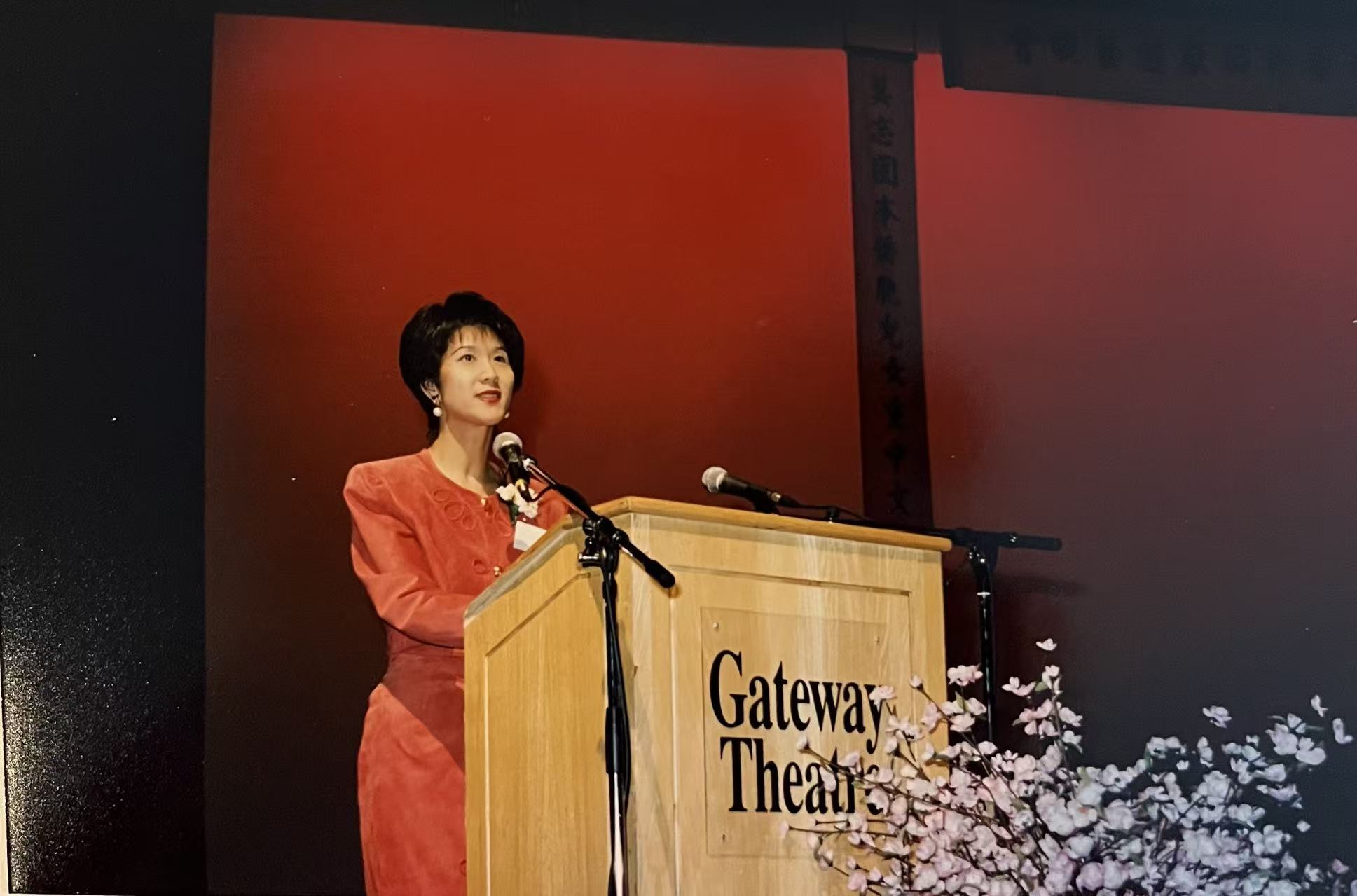
That is another thing about her that moved me.
She was not born brave. She was someone who had been afraid, who had endured, who had once withdrawn into silence. But when life required her to stand up, she trained herself, little by little, until she could.
Is that not another form of "heaven rewards diligence"?
Not the slogan kind of success, loud and polished. But the quieter kind: an ordinary person, across many years, asking a little more of herself, staying honest, refusing to give up, and slowly becoming the kind of person others later call "lucky."
06 EchoRemembered, and Tested by Life
There was one detail from the interview that I have not forgotten.
When she retired, the company said they wanted to hold a party for her. She thought it would be small and simple, just a normal farewell. But that day, many people came. Even people she rarely saw showed up. Colleagues from other provinces who could not attend sent messages and blessings.
She said she was surprised.
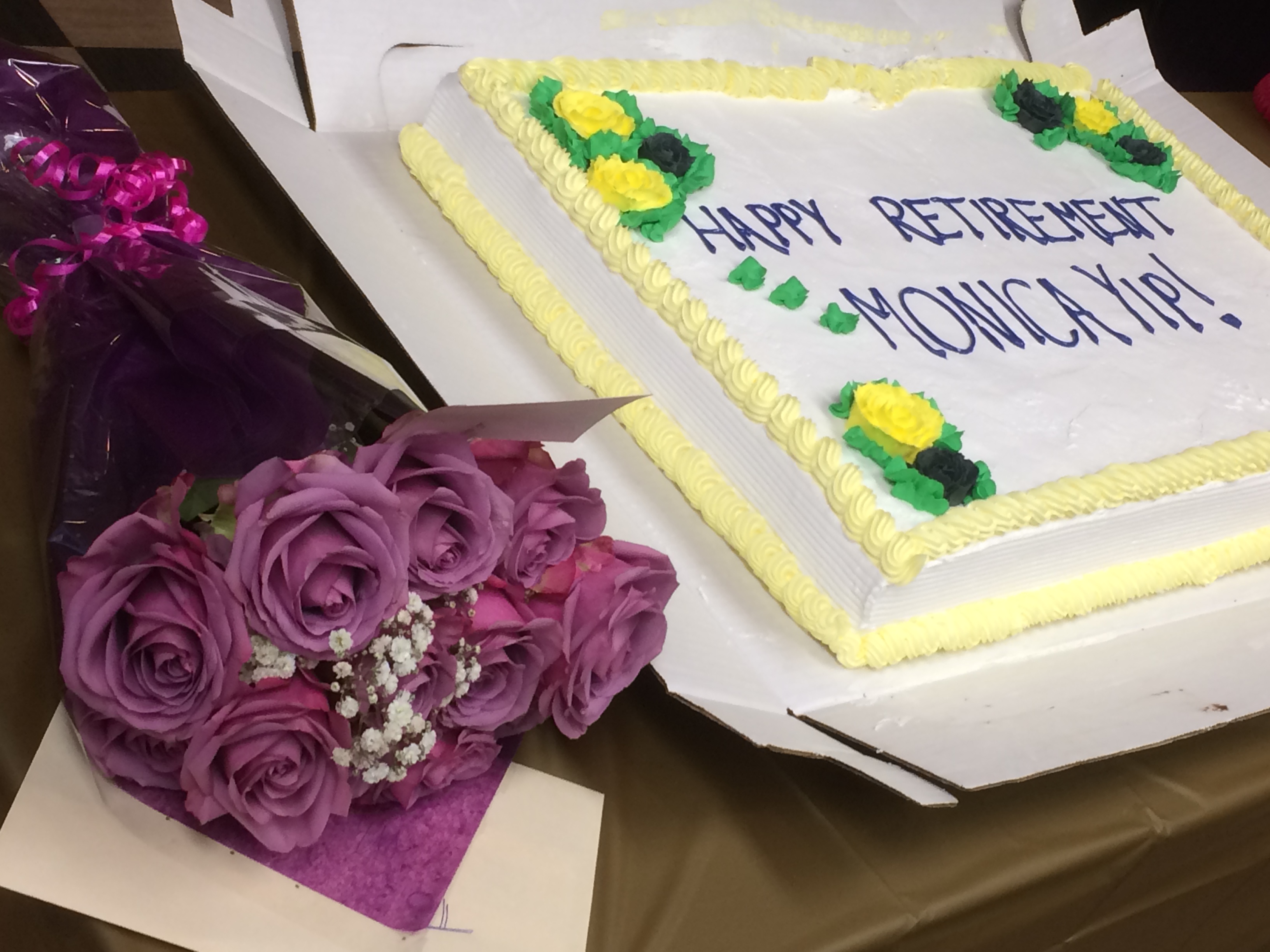
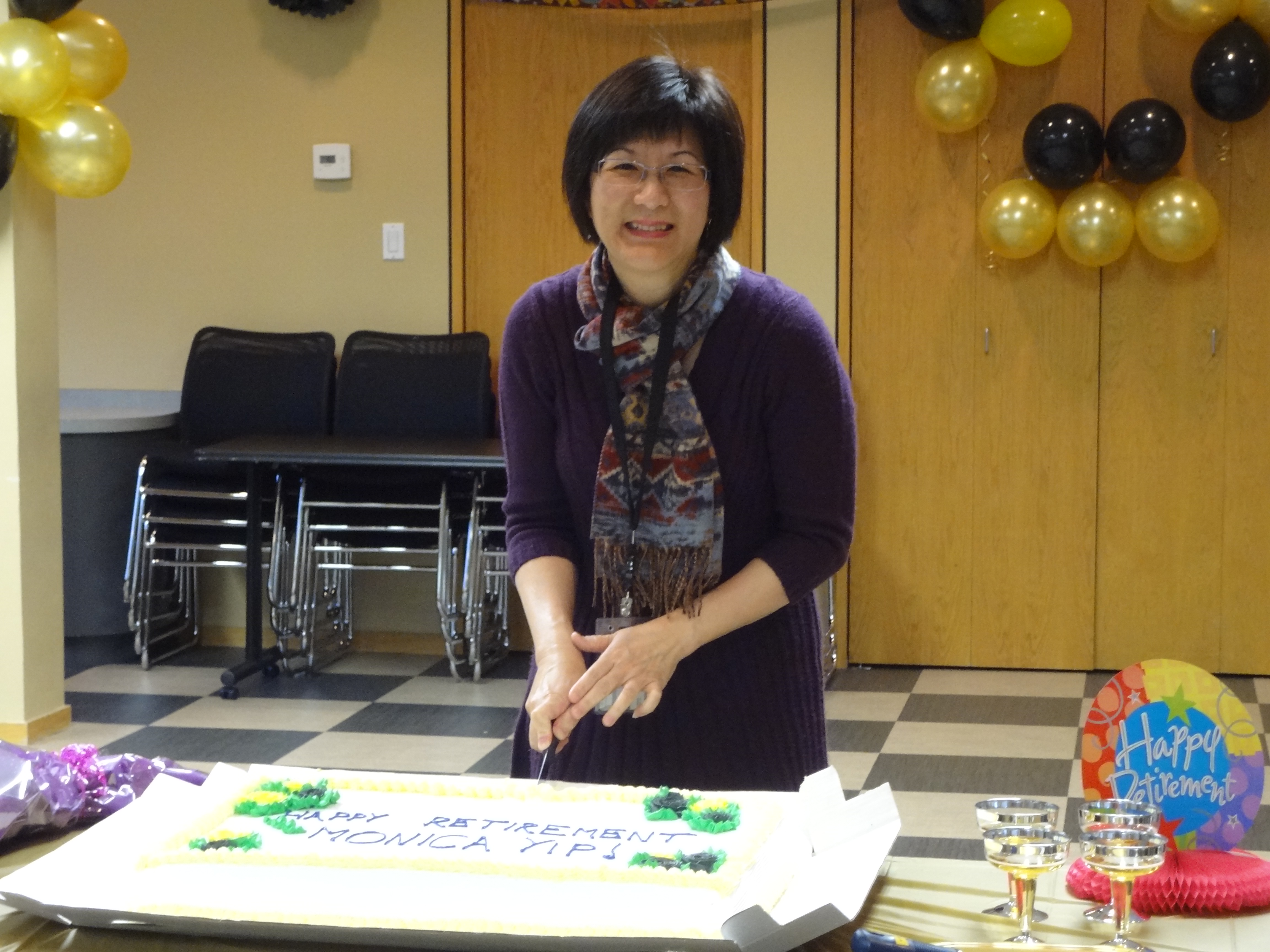
We were not surprised at all.
When a person spends decades working seriously, treating people sincerely, doing more than she says, standing straight, acting properly, refusing to take credit loudly and refusing to take kindness for granted -- how could such a person not be remembered?
She said every boss she had was good to her.
Then she laughed, almost embarrassed to say it out loud. But this was not boasting. It was the echo of a life lived with integrity.
She also experienced betrayal at work. There was once a staff member she trusted deeply, someone she treated well and had even been preparing to rely on more. While M Jie-jie was away at a meeting, that person joined others in complaining about her to management, claiming that the work was actually being done by the staff, not by M Jie-jie.
It hurt her.
She said she was already in her fifties before she learned that people could be like that.
Even so, she did not become harsh. She learned a lesson, yes: not everyone who is nice to you is sincere; not everyone you treat with your whole heart will return it with their own.
But she did not give up on the world.
She still smiles. She still calls herself lucky. She still prefers to believe that most people do not set out to hurt others.
That may sound naive when written down. But from her, it did not feel naive. It felt like a choice.
07 FacingAfter the Storm, Still Gentle
She also went through illness. In her fifties, she was diagnosed with breast cancer. She described the whole process almost as if it had happened to someone else: a call from the family doctor's office saying she had not had a checkup in a long time; then a mammogram; then an ultrasound; then a biopsy; and finally, the doctor calling with the result.
She was driving when the call came.
The doctor asked whether it was convenient to talk. She said it was fine.
Then she heard the diagnosis.
Her reaction was simply: oh, I am sick. Then I will get treated.
Oh, I am sick. Then I will get treated.
We asked whether she had been afraid. She said of course there was anxiety, because the unknown is always frightening. But she did not hand herself over to fear. People eventually arrive at certain moments in life, she said. When they come is not entirely up to us. What matters is that when it is time to face something, we face it.
This was not because she had no vulnerability.
She did feel anxious. She did feel nervous. She had spent much of her life keeping emotions inside. She admitted that she used to be very bad at expressing herself. Yet she also had a strong instinct for survival: whatever happens, first calm down, then deal with what is in front of you.
Listening to her, I felt a complicated kind of tenderness.
She is not someone standing on a mountain giving life lessons. She is someone who learned slowly, through life itself. Her clarity did not come from reading pretty quotes. It came from being pushed up against the wall again and again, and then slowly finding her own way out.
So when she said she saw herself in Zhou Shen, I understood.
She was not speaking of similar life events. She was speaking of a similar way of being.
Serious. Kind. Introverted but not weak. Afraid at times, but still moving forward. Unwilling to hurt others, unwilling to owe others carelessly. Willing to change the parts that can be changed in order to protect the parts that matter most.
At first, she was drawn to the beauty of his voice.
But what kept her there was the quiet strength within him.
The kind of strength that says: a person can be gentle without being confused; kind without losing herself; unshowy and still be seen.
And in truth, she is that kind of person too.
She is simply too humble to say it.
She keeps calling it luck.
She says she is not especially clever, only hardworking.
But I think that when effort lasts long enough, it becomes a kind of wisdom. To know your weaknesses and try to make up for them; to know you are afraid of speaking and still go learn; to know your responsibilities and do your work properly; to know a life is wrong for you and eventually turn around; to know your body is ill and accept treatment; to know retirement might become lonely and still find new love, new friends, and new joy -- this is not just luck.
This is evidence of a life lived carefully and earnestly.
08 TimeEvery Gap Became Softer
Near the end, I kept thinking of her smile.
It was not loud laughter, and it was not a performance of optimism. It was simply there, natural and warm, as if the heavier things in life had passed through her, been filtered gently, and somehow left tenderness behind.
That, I think, is why we like her.
She never tries to prove how remarkable she is. But sitting there, she lets us see the long arc of a life: from Hong Kong to Toronto, from Toronto to Vancouver; from a young mother to a workplace supervisor; from someone who did not know how to say no, to someone who eventually learned to protect herself; from a woman who spent half her life too busy for entertainment, to a retiree who wakes up each day with something to look forward to.
And that new expectation began with a song.
A beautiful voice suddenly filled an ordinary gathering. She looked up and asked, "Who is singing this?"
From that day on, a long road seemed to brighten a little.
Later, she found Weibo, found the North American fans, and found this group in Vancouver. She sat together with people much younger than herself, talking about music, life, and stories she may once have had no place to tell.
She laughed and said there was a generation gap between us.
But looking at her, I wondered where the gap really was.
Some people are young and already exhausted by life. Some people are in their seventies and still have light in their eyes. What truly brings people close is never age, place of birth, accent, or background. It is the kind of sincerity that makes others feel safe.
That day, we came from different places, spoke in different accents, and carried different lives with us. But because of Zhou Shen, we sat together.
A person sings, and somehow, at the end of that singing, the loneliness in many lives becomes a little less lonely.
And gaps that once seemed too wide to cross are gently filled.
A person sings, and somehow, the loneliness in many lives becomes a little less lonely.
M Jie-jie said she is very happy now.
I believe her.
It is not the happiness of someone carried easily through life by fate. It is the happiness of someone who endured, walked forward, woke up to herself, and can now sit in the sunlight and say, with a smile, "I have been lucky."
If Zhou Shen ever reads this story, I hope he knows this: he has not "given us nothing."
What he gave M Jie-jie was something very real -- something to look forward to after retirement, companionship through the COVID years, a circle of friends who might never have met otherwise, and a way for a woman in her seventies to recognize herself again.
In him, she saw a younger version of clarity, diligence, gentleness, and quiet strength.
And in her, we saw one of the best ways time can leave a person.
Not untouched by wind and rain.
But still smiling sweetly after it all, hair neatly in place, light in her eyes.