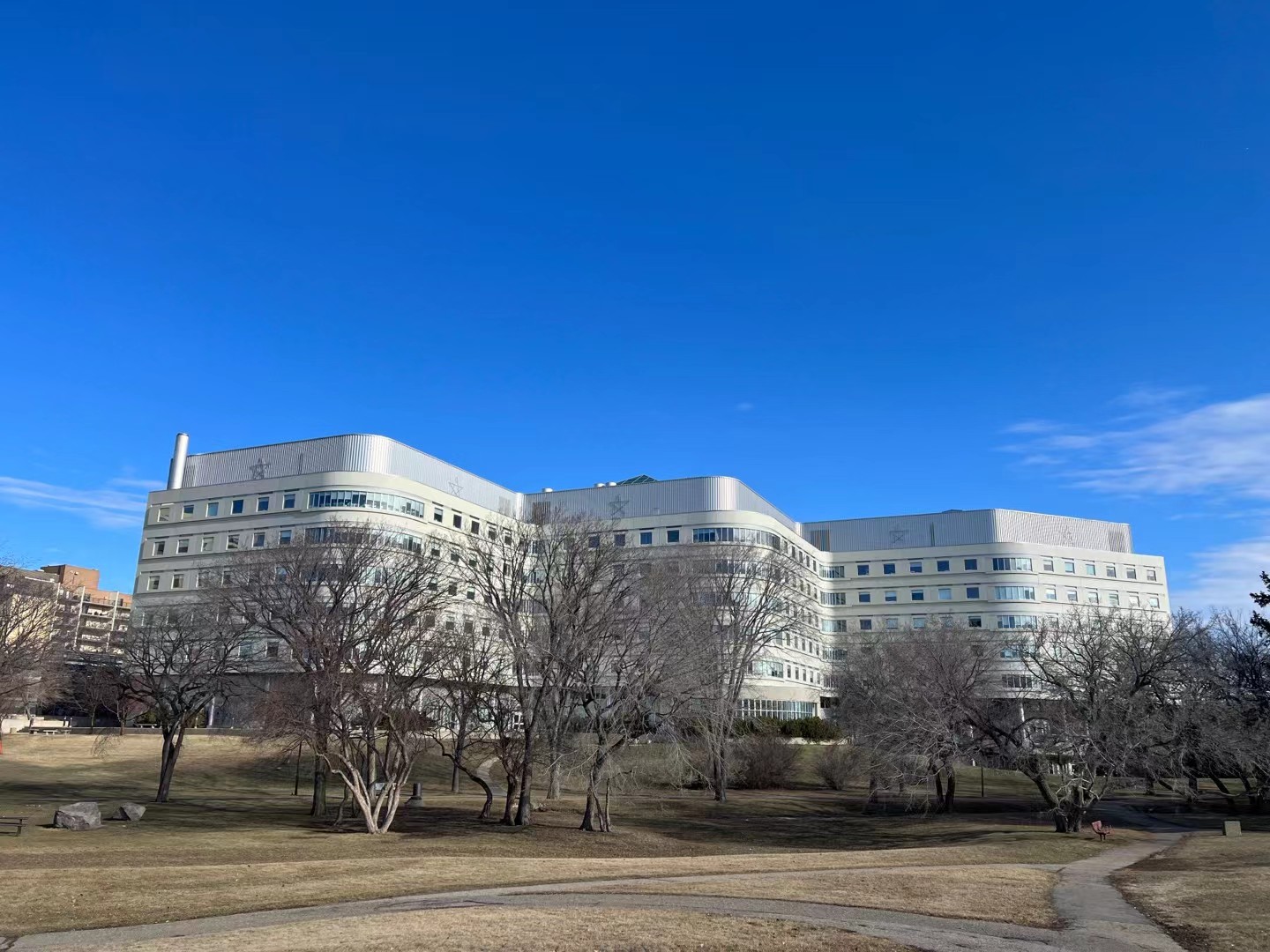
The first time I met her, it was through a video call.
She was in Saskatchewan. We were in Vancouver. Between us was not only the distance across the map, but also a one-hour time difference. We started at 7 p.m. our time; for her, it was already 8 p.m. The last glow of sunset was still hanging over Vancouver's sky, while Saskatchewan had already quietly entered the night.
She adjusted her light and laughed, saying, “Why does my lighting look like some kind of underworld filter?”
But on the screen, she looked nothing like that. What we saw was clearly a young, baby-faced woman, with a few strands of hair casually clipped back behind her forehead. She looked almost like a student who had just finished class, and also like a grown woman who had learned to hide herself gently inside calmness.
Her voice was steady. Calm. Clear. Logical.
She did not exaggerate. She did not dramatize. She simply spoke slowly, unfolding her life in front of us, layer by layer.
She was the kind of child people call “someone else's kid.”
She was bright, disciplined, and excellent, with strong academic training and a clear professional path. After graduation, she worked in China as a pathologist.
Her life seemed to move along a very defined track: study hard, do well, be recognized, and keep moving forward.
Later, she came to Canada.
After several turns, she received a pathology-related work opportunity in Saskatchewan.
She was genuinely surprised.
She had not expected that, after coming to Canada, she could still work in a field so closely connected to her original profession. So she happily accepted the offer and went to Saskatchewan.
When she talked about the Canadian medical system, she still used that same calm tone. She spoke about its problems, its inefficiency, and the many reasons behind that inefficiency. She was not complaining. She was simply stating facts.
Like someone who has already seen many things, and no longer gets surprised easily by the imperfection of the world.
Her daily work revolves around tissue samples.
When a patient's tissue sample arrives in front of her, the first step is triage. Just like an emergency department decides the order of care based on urgency, she also has to assess the sample and determine its priority. She gives it a small label.
And then that little sample waits quietly in its line.
When its turn comes, she first decides what processing procedure it needs. After that, it is placed under a microscope, where she carefully observes it, studies it, and determines what disease it may represent, how serious it is, and what information the specialist physician will need in order to decide the treatment plan.
It sounds like a very quiet job.
There is no rushing through emergency-room doors. No shouting in hospital hallways. No dramatic movie scene of a doctor running into an operating room.
And yet, it is so important.
Behind every tiny tissue sample is a real patient, and a real family waiting for an answer. The sample is taken from a body, transported, stored, processed, examined. At every step, something could go wrong. And at every step, the system has to hold it carefully.
She said it is like holes in Swiss cheese. Each layer may have its own holes, but when many layers are stacked together, those holes cannot easily line up all the way through. The meaning of the system is to stop errors from passing through, to protect fragile things, and to make sure they arrive safely at the final answer.
When I heard that, I suddenly felt deeply moved.
It turns out that some people's daily work is to guard other people's answers in silence.
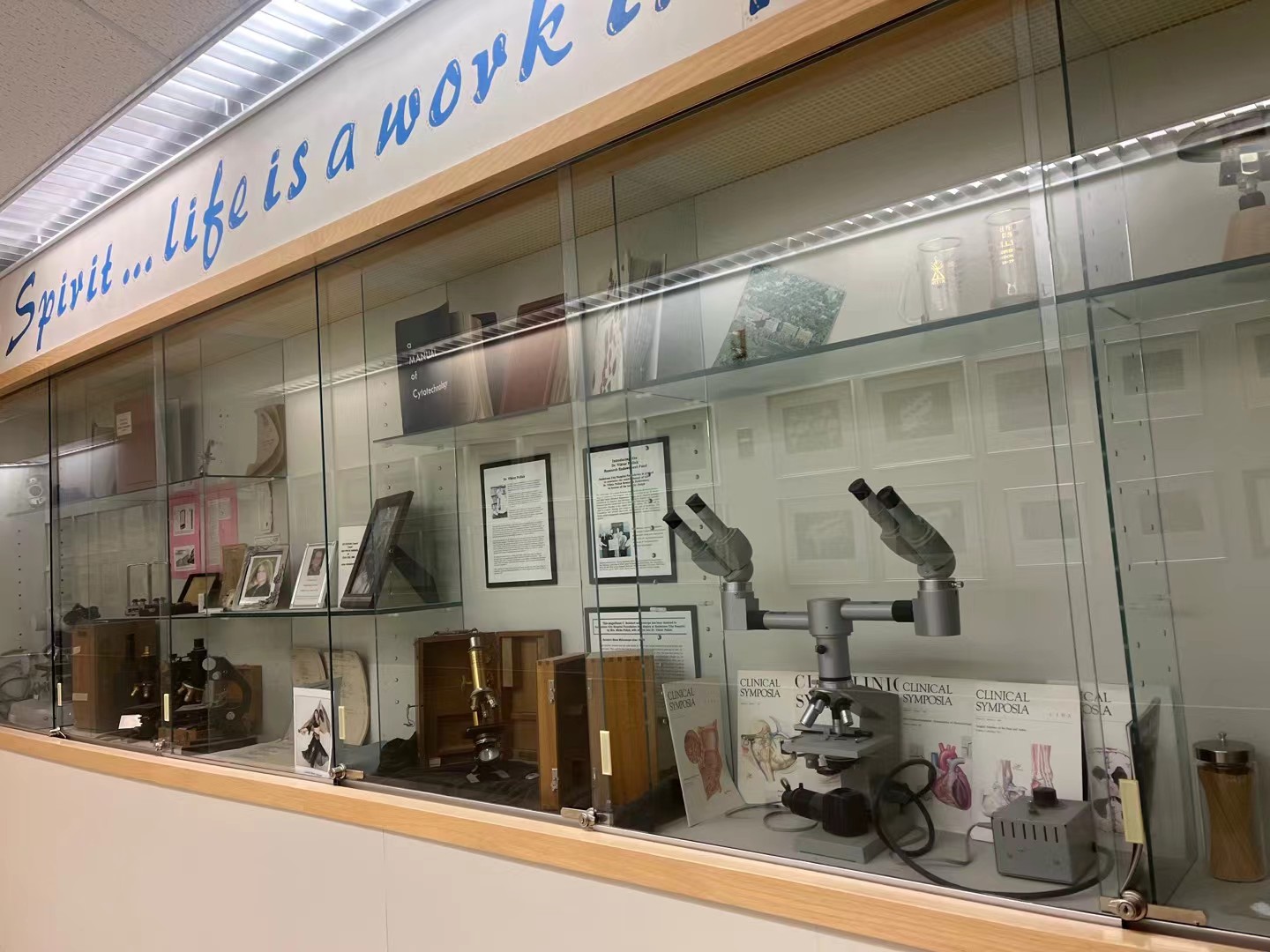
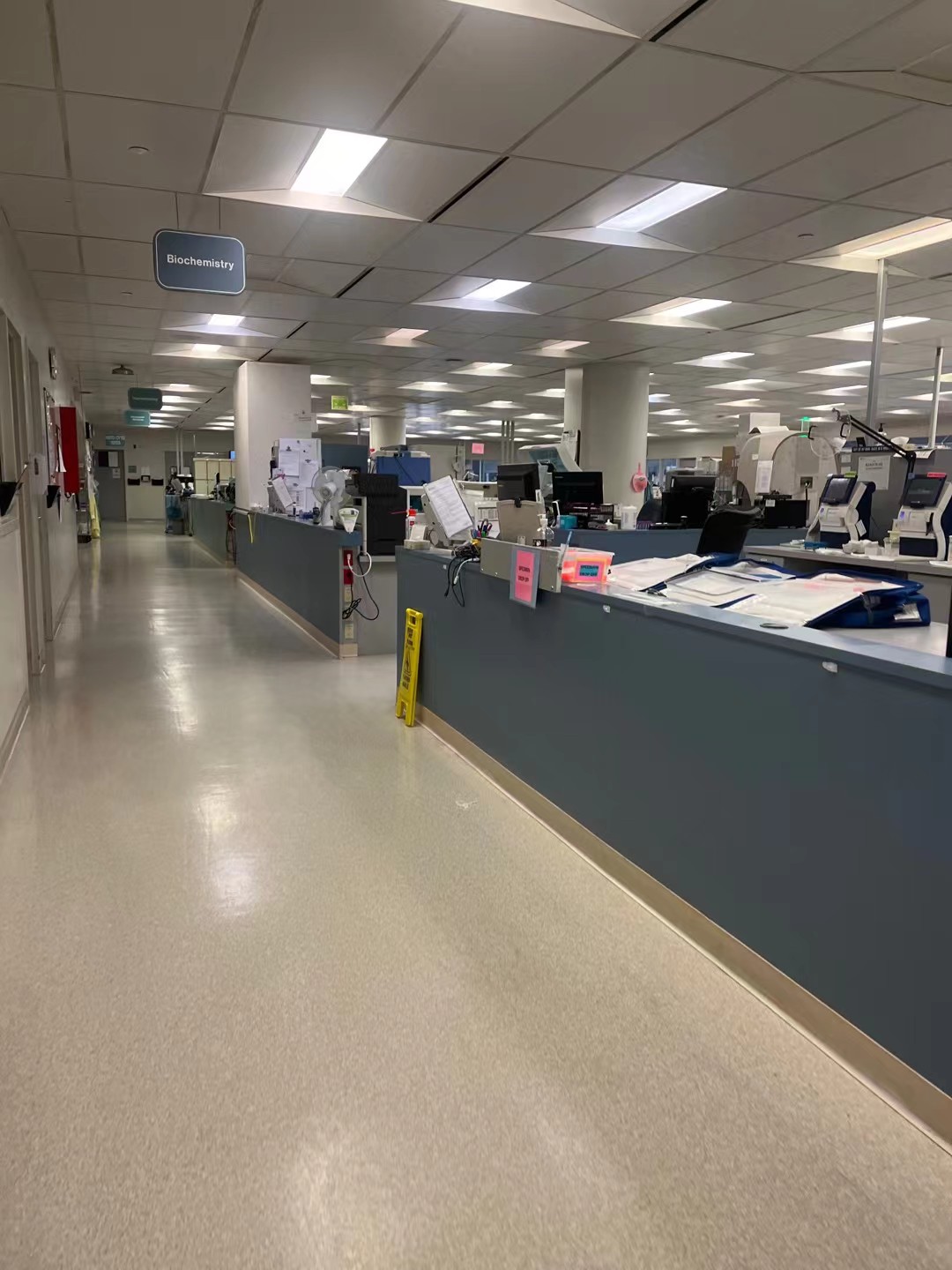
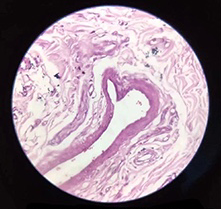
She also said that pathology work involves many chemical reagents. Some of them have biological toxicity to some extent. With proper protection, they usually do not cause immediate serious consequences. But compared with people who never come into contact with these substances, long-term cumulative exposure is still something different.
She said all of this very plainly.
As if it were just part of the job.
As if all the risks, fatigue, and responsibility had been quietly received and carried by her.
She described herself as an introvert: calm, rational. After entering the medical field, she said, she has also become more detached about life and death.
She said introverts are well suited for pathology, because they do not have to face patients directly.
She also said that being in medicine gives her a sense of mission. But after seeing so much illness and suffering, it becomes hard to stay truly happy. Most of the time, she exists in a state that is neither sad nor joyful.
Neither sad nor joyful.
Those words sounded light when she said them, but somehow they felt very heavy.
We listened as she kept speaking. Her voice was unhurried, like a quiet river. No waves on the surface, but so much depth underneath.
She talked about work, systems, and life. Not a single sentence was deliberately emotional. But the more plainly she spoke, the more it made my heart ache.
Later, we talked about Zhou Shen.
She said that the first time she heard Big Fish, she was stunned.
At that time, she did not know who Zhou Shen was. She did not know what he looked like. She only heard that voice and felt that maybe this was not a voice that belonged to an ordinary human being.
Later, she listened to more of his songs, and still kept her original judgment: heavenly.
Then, at some point, she saw him for the first time. To be honest, his styling at that time startled her. She thought he looked a little worldly, even somewhat different from what she had imagined from that voice. It almost destroyed her first impression.
But sometimes, this is how people are.
The first glance can be wrong. The first impression can be wrong. To truly understand someone, you always need time.
Later, she slowly learned that her judgment had been completely opposite to the truth.
Zhou Shen was not worldly.
He was almost excessively pure.
When she talked about this, it felt like she had finally confirmed something important. Don't judge a book by its cover. Don't judge a person by the first glance either.
It was also through Zhou Shen's story that she began to believe in something again: maybe the world still has a fair side. Maybe hard work is still rewarded by fate.
Following Zhou Shen also slowly enriched her life outside work.
It filled a certain empty corner inside her heart.
For someone who spends so much time with illness, life and death, samples, reports, and systems, she finally had a soft place where she could put a little light, a little music, and a little love that did not need to be explained.
She said that Zhou Shen often thanks everyone for coming to see him.
But is following him really for him?
She asked the question herself, and then answered it herself.
No.
In the end, all of this is still about becoming ourselves.
It is about doing what we love. It is about doing something that makes us happy, fulfilled, and more complete.
I especially love that sentence.
Loving someone is not only about running toward him. Sometimes, it is also about borrowing a little light from him and finding our way back to ourselves.
Tudou asked her, “Zhou Shen hopes everyone can write their own life diary well. Do you feel you have done that?”
She thought for a moment and said:
“I have achieved and gained quite a lot, but there is still room for improvement.”
That is very much her.
Always clear-minded. Always humble. Never easily giving herself full marks.
She is not the kind of person who loudly says, “I am already doing great.” She is more like someone who writes her life carefully, page by page. After finishing one page, she looks back and thinks: yes, this is okay, but it can still be better.
Near the end of the interview, Tudou asked her:
“What would you most want to say to the Shengmi who read this diary?”
She slowly answered, word by word:
Please hang in there.
“What I talked about just now were mostly the smooth parts of my life. But actually, I have also experienced low points. I have also gone through moments that felt very hopeless. I want to tell every Shengmi who reads this: trust me, all of this will pass. But it takes time. During that time, find something you are still able to do. Put aside the things you cannot overcome for now. It is also okay to do something that makes you happy. Please hang in there.”
She said those words so softly. But when I heard them, my heart suddenly felt sore.
Because that was not a pretty sentence.
It sounded like someone who had truly walked through the dark night turning back to say to the people behind her: I know it is hard there. I know some moments cannot be solved by inspirational words. I also know that some things, for now, simply cannot be fixed.
But please hang in there.
Do not rush to solve every problem. Do not force yourself to get better immediately. First, do one thing you can still do. First, hold on to one small thing that can still make you happy. First, get through today.
Time will move forward.
And so will people.
Maybe this is her version of “keep writing, and the story will become wonderful.”
Not because life will no longer have difficulties, but because as long as we are still writing, it is not over. As long as we are still willing to turn to the next page, there may still be light waiting in the chapters ahead.
That night, we had originally only planned to interview her.
But before we knew it, we had asked so many, so many questions. And she answered all of them with patience and sincerity, sharing everything she could.
She stayed with us from 8 p.m. in Saskatchewan until midnight.
Four hours.
The night on her side of the screen grew deeper and deeper, but she was still sitting there, quiet, clear-minded, and sincere, like a lamp that does not hurt your eyes.
Later, I thought: the person I can write down now is probably not even one ten-thousandth of who she really is.
She is such a rich and interesting person. She has the record of an outstanding student, the calmness of a doctor, the quietness of an introvert, and the softness of someone who follows light.
She has seen illness, so she knows the value of peace.
She has learned to look calmly at life and death, yet she still lives seriously.
She is not someone who expresses herself loudly, yet she was willing to open a small part of her story to us, so that others might see a little courage inside it.
Bless you.
Please keep writing your life diary freely and fully.
May your life be bright. May your diary be wonderful. May you see pathology under the microscope, but also see flowers, light, and all the answers that slowly arrive in your own life.